
At the OHS Leaders Summit, one concept resonated strongly across industries.
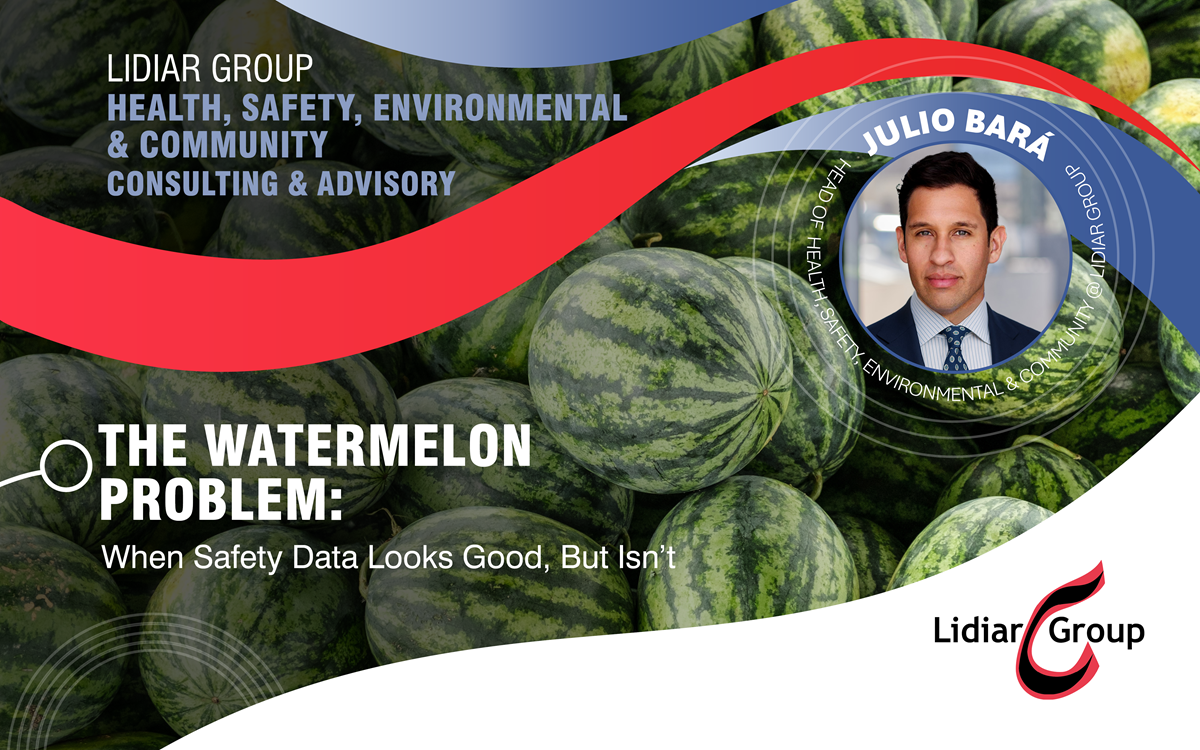
The “watermelon problem”.
Green on the outside, red on the inside.
It is a simple way of describing a complex issue: when reported safety performance looks healthy, but the lived experience of work tells a different story.
Julio Bara said, “We rely on data, but we do not always test whether it reflects what is actually happening.”
That tension matters because most organisations already have plenty of data. Lag indicators, lead indicators, audits and reporting packs all offer structure. But structure is not the same as truth. Good-looking data can still sit alongside unease, inconsistency and risk that people on the ground feel long before leaders see it.
Julio said, “Positive indicators should prompt confidence, but they should also prompt us to ask deeper questions.”
That was one of the Summit’s strongest reminders.
If leaders want a clearer picture of risk, they have to look beyond what is easy to count. They have to understand what work actually feels like; where the pressure points are, where the disconnects sit, and where systems sound stronger on paper than they feel in practice.
Julio said, “If we are not hearing uncomfortable feedback, we are unlikely to be seeing the full picture.”
This is where trust plays a central role in this process.
In many workplaces, trust exists within crews or immediate teams, but it does not always extend to the wider organisation. That shapes what people say, what they hold back, and whether issues are raised early enough to matter.
Julio said, “People will share what they feel safe to say, not always what needs to be said.”
That is why the answer is not to abandon metrics. It is to test them against lived experience. To pair data with direct engagement. To create ways for individuals to speak honestly. And when they do, to act visibly enough that people believe the effort was worth making.
Julio said, “Listening without action reinforces the belief that nothing changes.”
That point lands because it is true in more than safety.
The quality of insight a business receives is shaped by what people believe will happen after they speak up. If the feedback disappears into process, trust shrinks. If something changes, even in a small and practical way, credibility starts to build.
That is where the watermelon analogy becomes useful. It reminds leaders not to be seduced by the surface.
What looks green on the surface may not be healthy underneath, and data only matters if it reflects the reality of the work.