
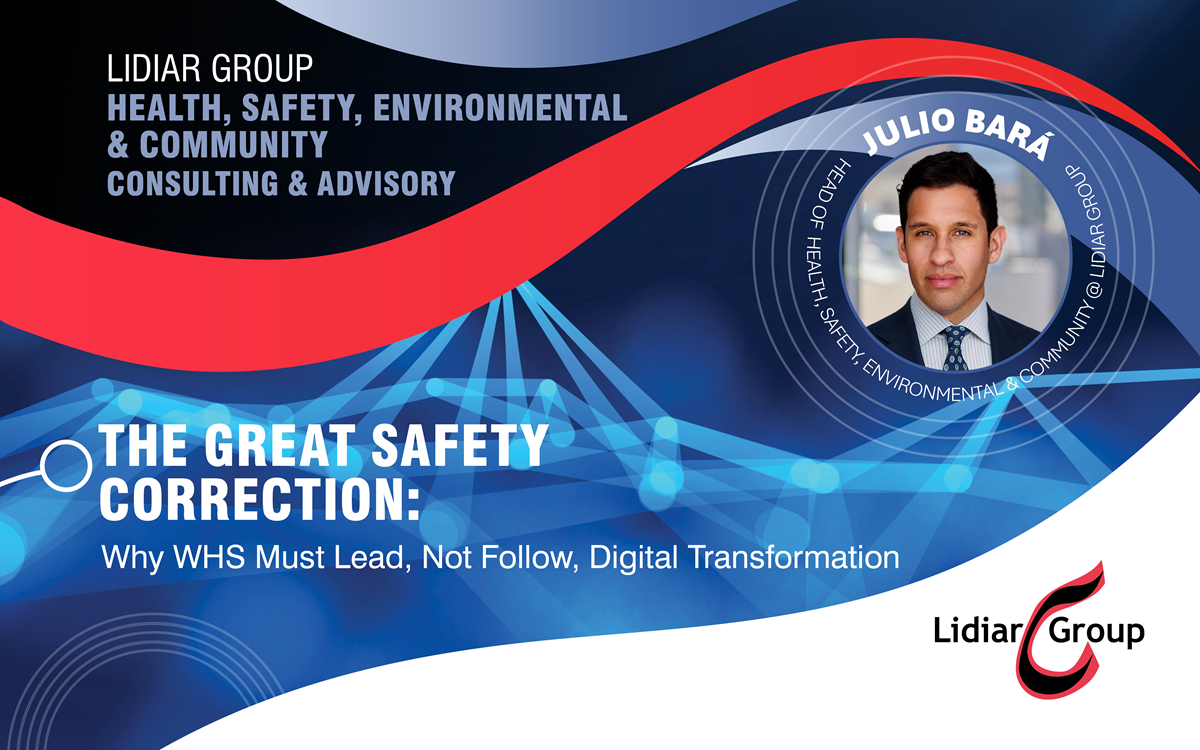
At the Australian 2026 OHS Leaders Summit on the Sunshine Coast, one message cut through early.
Work Health and Safety is still being invited into digital transformation too late.
By the time WHS is asked to review a system, platform or technology change, many of the most important decisions have already been made. Key choices around workflow, functionality and implementation have been made, and the downstream effects on workload, usability and role clarity are already starting to play out.
Julio Bara said, “We’re still seeing safety brought in as a checkbox. If we want better outcomes, we need to be in the room in the earlier planning conversations where those decisions are first taking shape.”
That was the heart of what the Summit described as the great safety correction: a shift from participation to influence.
For years, WHS has too often been framed as the function that reviews risk at the end. But digital transformation is forcing a different expectation. When technology reshapes how work is done, safety cannot sit on the sidelines waiting to respond. It needs to help shape the conditions of work from the outset.
Julio said, “If safety is only about stopping things, we’ll always be sidelined. The real opportunity is showing how WHS can simplify work, reduce friction and improve performance.”
That is where the conversation becomes more commercially relevant.
This is not just about compliance. It is about design quality – whether a new system makes work clearer or more complex, whether it supports better decisions or creates more confusion, and whether the human impact has been considered before the rollout begins.
That was especially clear in the Summit discussions around psychosocial risk. Technology decisions do not just affect process. They shape pressure, pace, ambiguity and the everyday experience of work.
Julio said, “Every new system, every new process, it all shapes how people experience work. If we’re not assessing that upfront, we’re missing the biggest risk in the room.”
The stronger message from the Summit was that this cannot be treated as a separate safety overlay. The best organisations are not building parallel WHS processes around technology. They are embedding safety thinking into the decision pathways that already exist; project assurance, investment approvals, change processes and post-implementation reviews.
That is where WHS starts to move from reviewer to contributor.
Julio said, “The organisations that get this right don’t operate in silos. Safety, tech and operations solve problems together.”
This is also when the role of WHS begins to shift, with less emphasis on gatekeeping and greater influence over the decisions that shape work, before risk becomes embedded in the system.
Because better technology does not automatically produce better outcomes.
Better decisions do.