
Every few years, the global economy is reminded just how interconnected modern supply chains have become.
Today, geopolitical tensions in the Middle East, uncertainty surrounding fuel supply routes and volatile energy markets are once again placing pressure on organisations across Australia. Rising fuel prices are only the most visible symptom. Behind them sits a far broader challenge affecting procurement, contracting, logistics and project delivery.
While the trigger may be different, the lesson remains the same. Supply chain disruption is no longer an exception. It is a business risk that every organisation should expect and prepare for.
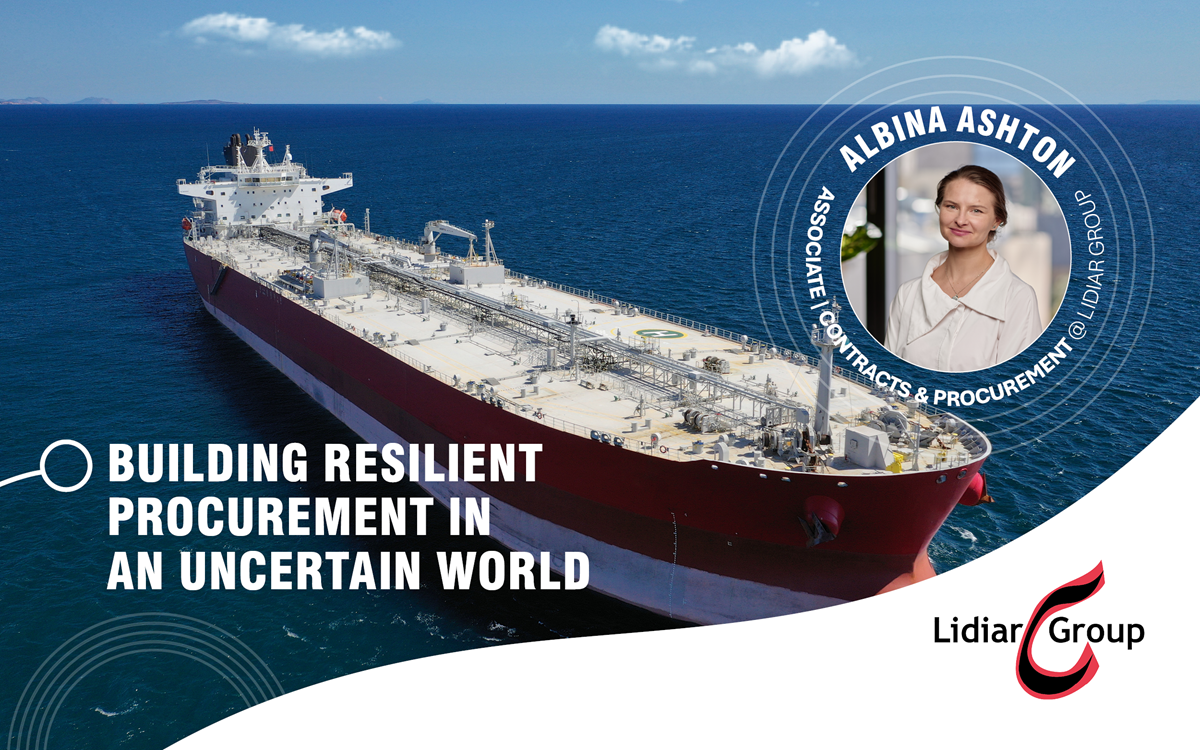
For Albina Ashton, Associate – Contracts and Procurement at Lidiar Group, the current environment reinforces an important principle.
“The organisations that perform best during uncertainty aren’t necessarily those with the cheapest suppliers or the tightest contracts. They’re the ones that have built resilient commercial relationships.”
Preparing for disruption, not simply responding to it
Fuel is embedded in almost every stage of modern supply chains. It influences transport, manufacturing, packaging, construction materials and countless products organisations rely on every day.
When those costs fluctuate, the impact is rarely isolated.
“Fuel is embedded in almost everything we procure. When those costs move, the entire system feels it.”
Rather than viewing market volatility as simply another commercial challenge, Albina believes organisations should use these moments to strengthen how they procure goods and services.
That means diversifying supply chains, strengthening local supplier networks where appropriate, embracing innovation and viewing sustainability initiatives through both an environmental and commercial lens.
Alternative materials, greener packaging and emerging technologies are no longer simply ESG initiatives. Increasingly, they are practical risk management strategies that improve resilience against future disruptions.
Contracts should create certainty, not conflict
Many organisations are now finding themselves operating under contracts negotiated before the current volatility emerged.
Fixed pricing, rigid delivery obligations and inflexible commercial arrangements can quickly place pressure on every party involved.
The instinct can be to protect contractual positions. Albina believes the better approach is to protect the relationship first.
“Communication is vital. Sit down and have that conversation early.”
When circumstances change, successful organisations engage suppliers, contractors and clients early to discuss options before issues escalate.
That may involve reviewing delivery programs, exploring alternative products, adjusting procurement strategies or identifying practical commercial solutions that allow projects to continue successfully.
“The commercial model of win and lose doesn’t work anymore. If one party loses, ultimately everyone loses.”
Collaboration is becoming a commercial advantage
Major infrastructure programs across Australia are already demonstrating that collaboration is becoming more than simply good practice. It is becoming essential.
With increasing project complexity, constrained resources and ambitious delivery timeframes, organisations are recognising that no single business can solve every challenge alone.
“No single organisation can deliver these projects alone. Collaboration is no longer a concept. It is a necessity.”
This is driving greater interest in more flexible contracting models that allow organisations to adapt as circumstances evolve.
Instead of viewing contracts as rigid legal documents, organisations are beginning to build mechanisms that accommodate change while maintaining commercial certainty.
The result is stronger projects, healthier supplier relationships and better long-term outcomes.
Communication remains the greatest commercial tool
Throughout her career, Albina has seen the difference effective communication can make.
“I have seen six-month negotiations over a single clause. It is not productive.”
Lengthy legal disputes rarely create value. More often, they consume resources, delay projects and damage relationships.
Open conversations, shared problem solving and a willingness to understand each party’s commercial reality consistently produce better outcomes.
This becomes particularly important during periods of market uncertainty, where delays can quickly compound broader supply chain pressures.
Contracts are designed to be used
One of the most common issues Albina encounters is not poor contract drafting.
It is poor contract administration.
“A contract should be a blueprint for how work is delivered.”
Too often, contracts are negotiated, signed and filed away until a dispute arises.
In reality, they should be guiding project delivery from day one.
Regular progress meetings, performance reviews, notice provisions and reporting obligations all exist for a reason. They provide opportunities to identify risks early, address issues collaboratively and keep projects aligned with commercial objectives.
A well-managed contract should never become a surprise.
It should become one of the project’s most valuable management tools.
Resilience starts long before the next crisis
Whether disruption comes from geopolitical instability, natural disasters, pandemics, inflation or changing trade conditions, one thing has become increasingly clear.
Future disruption is inevitable.
The organisations that perform best will not necessarily be those with the lowest procurement costs. They will be those that invest in resilient supply chains, strong supplier relationships and contracts that actively support project delivery rather than simply govern disputes.
For procurement and contracts professionals, resilience means:
- Building trusted supplier relationships before they are needed.
- Designing flexibility into commercial agreements.
- Prioritising communication over confrontation.
- Using contracts as active management tools throughout delivery.
- Looking beyond immediate costs to build long-term commercial capability.
As Albina puts it: “We need to work with the contract, not against it.”
In an increasingly uncertain world, resilience is no longer created when disruption occurs.
It is built into every commercial decision long before the next crisis arrives.