Few regions embody Queensland’s industrial strength, work ethic and future ambition quite like Fitzroy. Every time I travel through Rockhampton, Gladstone and the Bowen Basin to support clients and project teams, I’m reminded of just how critical this region is to the state’s economic and infrastructure landscape. The capability here is world-class, built on generations of experience in mining, transport, energy and emerging clean industries. It’s a region I’ve come to deeply respect, not just for the scale of its projects, but for the people who deliver them.
As we head into 2026, here are my takeaways from the QMCA 2025 Queensland Major Projects Pipeline Report and thoughts on the region and the projects that will ensure the region remains a powerhouse for Queensland industry.
A Region With Scale and Momentum
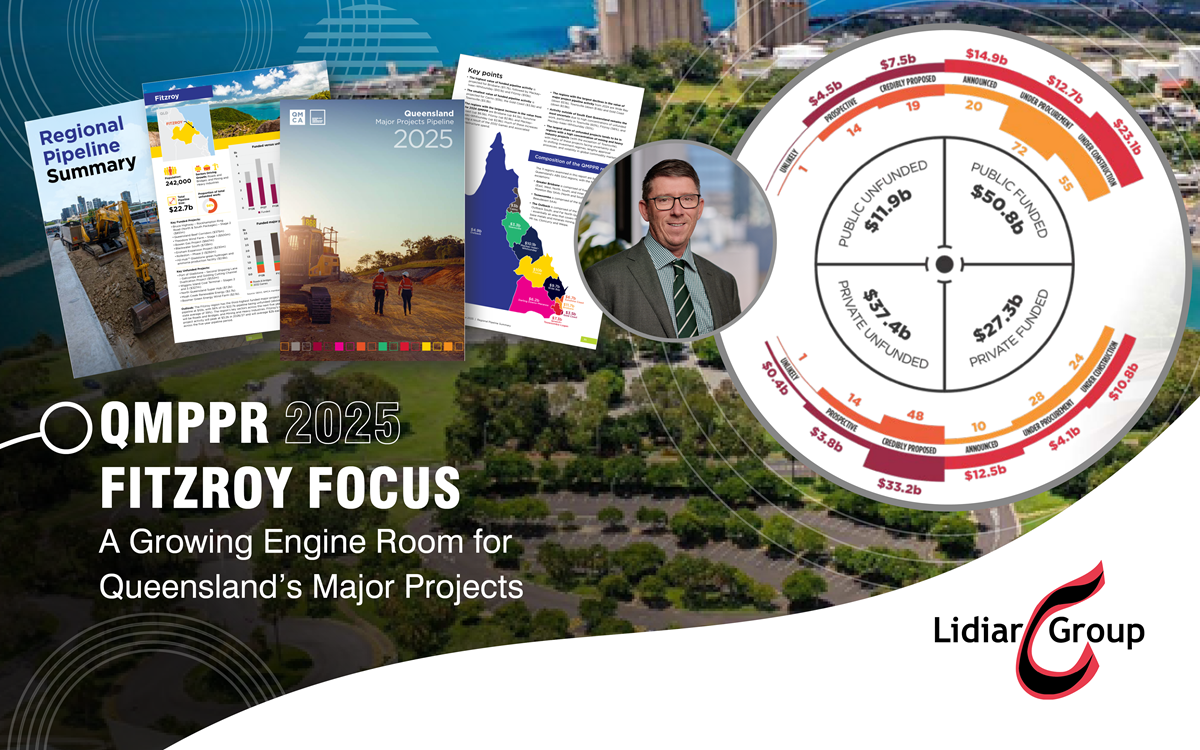
Fitzroy is one of Queensland’s powerhouse regions, home to 242,000 people and a total major project pipeline valued at $22.7 billion. More than half of that pipeline, 56%, remains unfunded, highlighting the volume of opportunity still waiting to be unlocked.
Despite that, the region already has $10 billion in committed work, giving it the third-largest funded pipeline in the state. This mix of certainty and future potential positions Fitzroy as a central contributor to Queensland’s industrial and economic trajectory over the decade ahead.
Key Funded Projects Shaping the Region
Several major projects are already progressing and reshaping the region’s transport, resources and clean-energy foundations, including:
- Bruce Highway – Rockhampton Ring Road (Stage 2) – $851m
- Queensland Beef Corridors – $375m
- Theodore Wind Farm – Stage 1 – $500m
- Bowen Gas Project – $847m
- Blackwater South – $729m
- Ensham Expansion – $230m
- Rolleston Phase 2 – $292m
These projects reflect a region that continues to modernise while retaining its industrial backbone.
Unfunded Projects Driving Future Potential
The forward pipeline contains some of Queensland’s most significant prospective developments, including:
- Port of Gladstone – Second Shipping Lane ($532m)
- Wiggins Island Coal Terminal Stages 2 & 3 ($327m)
- North Queensland Super Hub ($7.2b)
- Moah Creek Renewable Energy ($2.7b)
- Boomer Green Energy Wind Farm ($2.1b)
Together, they show how critical Fitzroy will be to the state’s transition into low-carbon energy production, export diversification and industrial renewal.
Sectors Driving Growth
Across the next five years, two sectors will shape the region’s activity profile:
- Roads and Bridges
- Mining and Heavy Industries
Major project activity is expected to peak at $3.2 billion in 2026/27, stabilising to an annual average of $2 billion. This consistent volume of work reinforces the region’s long-term momentum.
Workforce Implications
Fitzroy has the highest construction labour demand in Queensland, requiring around 5,400 workers every year. Much of this pressure is driven by electricity projects (59%), mining (20%) and transport investment (14%).
Securing and sustaining this workforce will be vital to ensuring the region’s pipeline is delivered safely, efficiently and to the standard Queenslanders expect.
A Personal Reflection on Fitzroy’s Importance
Every time I’m in Fitzroy, whether meeting with a client in Gladstone, supporting a delivery team in Rockhampton or visiting industrial operations across the Bowen Basin, I see the same thing: capability, pride and the drive to get things done.
This region is built on people who turn complex, large-scale ideas into reality. They are practical, skilled and deeply committed to the industries that have shaped Central Queensland for generations. As someone who works closely with these teams, I have enormous respect for how they balance heritage with ambition, maintaining the strength of today’s mining and industrial sectors while preparing for tomorrow’s hydrogen, renewable energy and advanced manufacturing opportunities.
At Lidiar Group, we’re proud to work alongside the businesses and project teams that make Fitzroy such a critical part of Queensland’s future. The work underway here doesn’t just build regional infrastructure; it builds state-wide capability, economic resilience and long-term prosperity.